
Creative Focus: Nine Practical Habits for a More Organized Workday
Published · By ทีม WARP DESIGN
Creative focus starts with clear priorities, small deliverables and realistic work blocks. Use technology to reduce repetition and adapt the routine to your circumstances.
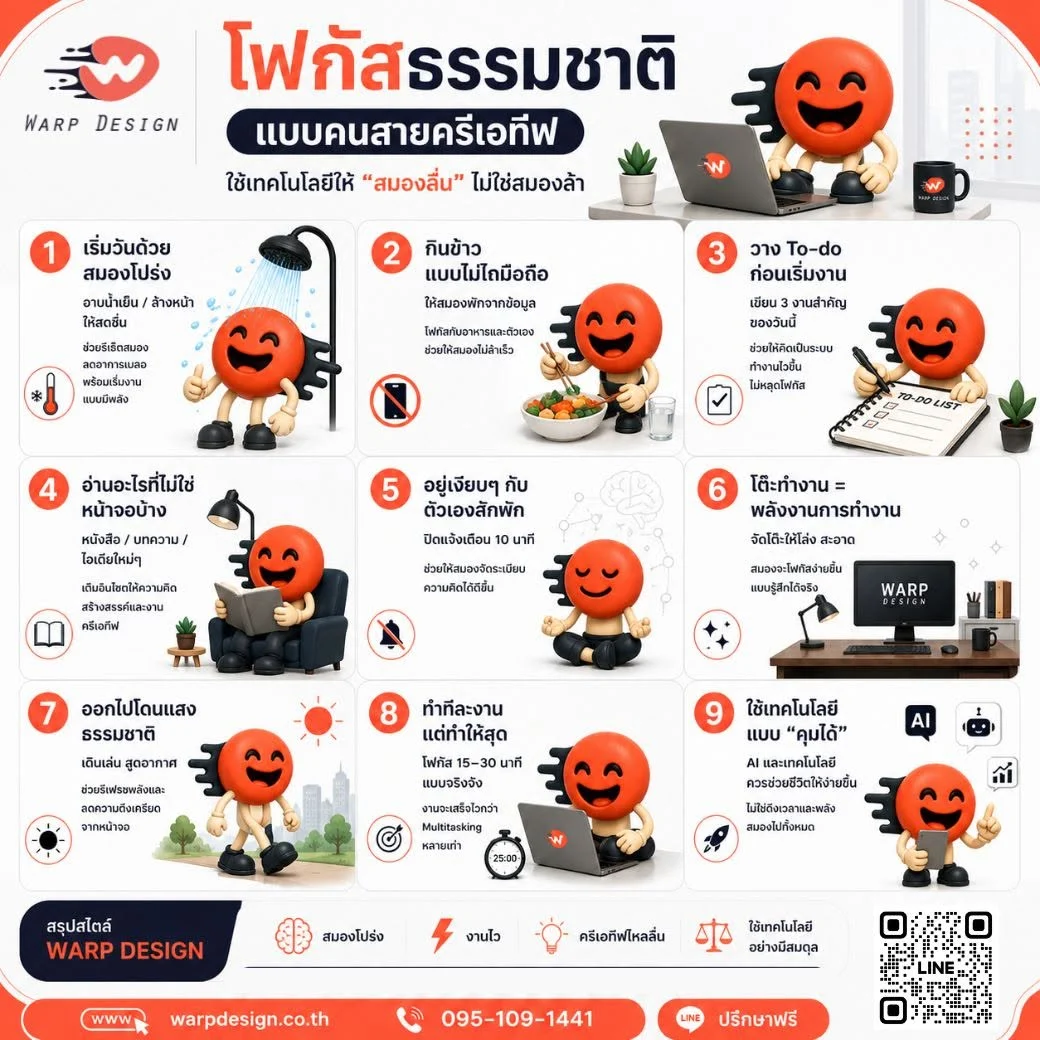
Use small priorities, flexible work blocks, a ready workspace and purposeful technology to make creative tasks easier to start.
Creative focus does not require a full day of uninterrupted sitting. Design and content work often mixes idea generation, revisions and messages. Start by identifying the deliverable and its next small step.
These are optional workflow ideas, not health treatments or a routine everyone must follow.
Start with a clear direction
1. Use a small start signal
Choose a convenient routine, such as preparing water or opening the brief. No particular shower temperature is required.
2. Try a screen-free meal break when practical
Avoid adding more tasks through a work feed if that suits your day. Keep the routine flexible around family and urgent responsibilities.
3. Define a small number of priorities
Name the output: one checked product record, one draft post or one corrected file. Replace vague tasks like “do marketing” with a clear completion condition.
Reduce avoidable interruptions
4. Keep essential reading together
Use a one-page brief or checklist, printed or digital. The purpose is easier access, not buying more equipment.
5. Arrange a quiet work block
Pause irrelevant notifications, agree on an urgent contact channel and park unrelated ideas on a list rather than switching immediately.
6. Prepare the workspace
Keep the current brief and source files close. Separate originals from delivery files. A practical desk matters more than matching a styled photo.
Use realistic blocks
7. Take a convenient change of activity
Stand, get water or step away from the screen when practical. This article does not prescribe sunlight exposure or a health program.
8. Complete one kind of task at a time
Try a work block that fits, such as 15–30 minutes, without treating it as a universal optimum. Separate ideation, factual checking and delivery.
9. Use technology to remove repetition
Let AI draft a checklist or outline, while you verify important facts. Keep a primary place for tasks and avoid duplicating the same information across unnecessary systems.
An example 60-minute block
- 5 minutes: select one output and gather source files.
- 20 minutes: create the first draft.
- 5 minutes: pause and note the next action.
- 20 minutes: check facts and revise.
- 10 minutes: deliver, save and record what comes next.
This is an adaptable example. If interrupted, note where you stopped instead of trying to recover every task on the same day.
Review deliverables rather than screen time
Notice which tasks start more easily, which need repeated correction and where interruptions arise. Adjust one thing at a time. Teams should keep ownership, deadlines, status and source briefs easy to find.
Explore WARP DESIGN digital marketing or discuss content workflow needs. Prepared 13 November 2026.