How Can AI Help an Online Store? Five Practical Tasks and Example Briefs
Published · By ทีม WARP DESIGN
AI can assist with repetitive store tasks, but facts still need review. Always-on replies require a separately configured and tested integration; sales and profit are not guaranteed.

Use AI for content ideas, visual briefs, reply drafts, customer-question analysis and product information, with clear human review steps.
AI can help an online store with more than captions. Start with one repetitive task that has facts you can verify, rather than handing over the whole operation.
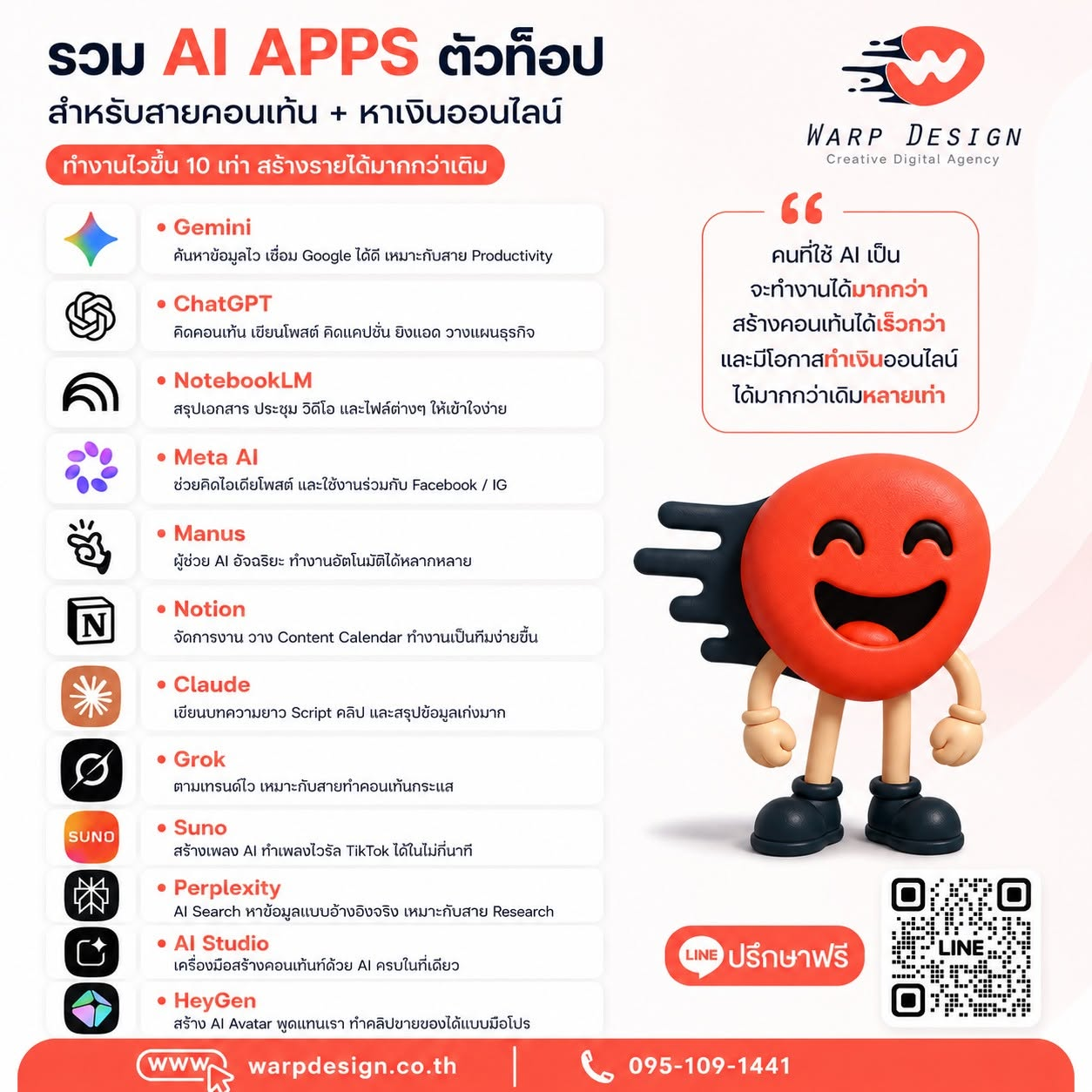
The cover's speed, sales and profit claims are illustrative, not guaranteed. Google Bard is the former name of Gemini. An AI app alone is not a deployed 24-hour support system.
1. Draft content from verified product facts
Provide the code, name, confirmed fitment, quantity, differences and store conditions. Ask for post ideas and questions still needing confirmation. Prohibit invented prices, warranty promises or compatibility. Check names, codes and units before publishing.
2. Prepare visual briefs
Use AI for layouts, backgrounds and copy ideas while preserving the real product, logo, label and included quantity. Do not invent vehicle fitment or change a product shape. Compare the result with the original rather than judging appearance alone. Explore Canva design tools.
3. Draft replies and define handoffs
Start with common stock, delivery and compatibility questions using approved policies. Have a person check live prices, stock and conditions. Route negotiation, returns and incomplete cases to the responsible team.
Automatic replies require a channel integration, knowledge base, permissions, testing and handoff rules. Leaving a general AI chat app open is not enough to provide always-on customer service.
4. Group customer questions
Remove names, phone numbers, addresses and identifying details before analyzing question patterns. Ask AI to group issues such as unclear quantities or missing fitment information. Treat the output as a hypothesis for review, not perfect knowledge of customer behavior.
5. Organize product information
Draft clear sections for facts, suitability, checks before ordering and store conditions. Keep codes and specifications faithful to source material. More text does not guarantee Google rankings. Avoid scaled pages created from incomplete facts to manipulate search. Read Google spam policies and WARP DESIGN's AI SEO guide.
Choose tools by workflow
ChatGPT and Gemini can support drafting where account features allow it. Design tools help with visuals; Copy.ai and Writesonic provide content-related tools to evaluate. Test the same brief instead of subscribing to everything.
Bard has been renamed Gemini. See Google release notes. Check current plans and integration support before using a tool in store operations.
A small one-product pilot
- Choose one product with complete source information.
- Draft a post and common replies.
- Verify facts with the responsible person.
- Use the reviewed output and record remaining questions.
- Compare preparation time, corrections and enquiry quality.
If verification takes more time than the process saves, improve the inputs or scope before adding tools. Price changes, order acceptance and follow-ups require explicit operating rules.
Explore AI Chatbot · Digital marketing · Contact WARP DESIGN. Reviewed 13 November 2026.